
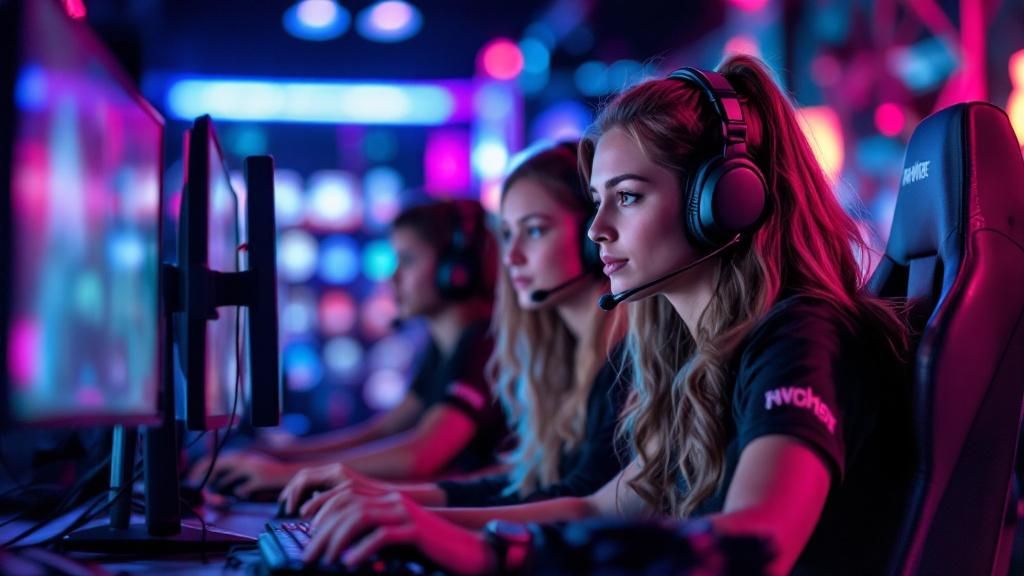
The professional gaming landscape has undergone a significant transformation, with women players now comprising record-breaking numbers in major esports tournaments worldwide. This transformative change disrupts long-standing stereotypes and indicates a structural shift in the industry’s demographics. From fighting games to competitive shooters, women are not merely taking part but thriving at the highest levels of play. This article examines the forces behind this remarkable growth, celebrates the pioneering competitors spearheading the movement, and examines what this progression means for the trajectory of esports competition.
Overcoming Obstacles in Professional Esports
The growth of female participation in professional gaming tournaments constitutes a watershed moment for the esports industry. For many years, professional esports stayed a largely male-centric field, with women encountering structural obstacles ranging from societal prejudices to inadequate sponsorship opportunities. However, recent years have witnessed a seismic shift as organisations increasingly recognise the talent and dedication of women competitors. Major tournaments now showcase women competing at elite levels, challenging established assumptions about competitive gaming ability and inspiring a fresh wave of aspiring female competitors globally.
This change has been spurred by multiple overlapping developments, including increased media attention, specialist women’s esports organisations, and community-led programmes advancing inclusion. Sponsorship opportunities have expanded in availability, whilst digital broadcasting services have widened audience reach to female competitors’ gameplay. Academic establishments have commenced creating esports courses that deliberately foster female participation, creating pathways once inaccessible. The acknowledgement of esports as a credible career path has concurrently eliminated traditional gender-based obstacles, allowing merit-based competition to prosper and positioning esports as an increasingly inclusive and progressive sector.
Expansion Metrics and Market Growth
The surge in female participation has been accompanied by substantial quantitative growth across the esports industry. Current statistics reveals that women now represent approximately 30% of tournament competitors in professional gaming, a marked growth from just 5% a decade ago. Leading competitions have seen exponential growth in women’s participation, with prize funds reserved for women’s competitions growing significantly. This growth demonstrates not only increased interest but also increased funding from tournament operators and sponsors acknowledging the market opportunity of inclusive gaming platforms.
Market analysts project continued expansion in the coming years, with forecasts pointing to female participation could attain 40 per cent by 2026. Sponsorship revenue allocated to female gaming initiatives has grown three times over since 2019, engaging major technology companies and beverage brands. The emergence of women-focused leagues and tournaments has established further pathways for up-and-coming competitors. This revenue expansion shows that inclusivity and profitability are not in conflict, fundamentally reshaping how the industry handles talent development and audience engagement strategies.
Difficulties and Opportunities Ahead
Despite significant progress, the professional gaming industry confronts considerable challenges hindering continued progress for female competitors. Ongoing gender-based abuse, both online and within gaming communities, remains a major hurdle to entry and retention. Additionally, sponsorship opportunities remain disproportionately allocated, with female-led teams obtaining substantially lower investment than their male counterparts. Tournament organisers and industry stakeholders must prioritise creating safer, more inclusive environments to ensure sustained growth and genuine equality within professional esports.
The infrastructure supporting female gamers requires substantial investment and development moving forward. Educational initiatives, coaching schemes, and grassroots tournaments deliberately structured for developing female players could substantially increase involvement across all esports games. Furthermore, introducing tougher conduct standards and disciplinary procedures across competitions would discourage discriminatory behaviour and create more positive esports communities. Collaborative alliances between prominent gaming organisations and traditional sports organisations could establish gaming credibility whilst setting industry benchmarks that protect all participants.
Looking ahead, the outlook for female participation in professional gaming appears remarkably encouraging. As visibility increases and role models inspire the next generation, participation rates will continue to increase substantially. Industry leaders recognising the business and moral imperatives of inclusivity are committing resources in women’s esports initiatives. With sustained effort to addressing systemic challenges and creating truly inclusive environments, professional gaming stands poised to become a genuinely welcoming arena where talent, dedication, and skill determine success, independent of gender.
